AN ILLUSTRATED HISTORICAL REFERENCE
LAUBY LURES.
BUILT TO BE
DIFFERENT.
Wood, wire, feathers—and an inventive approach to fishing. Explore the lures and the Wisconsin maker behind them.
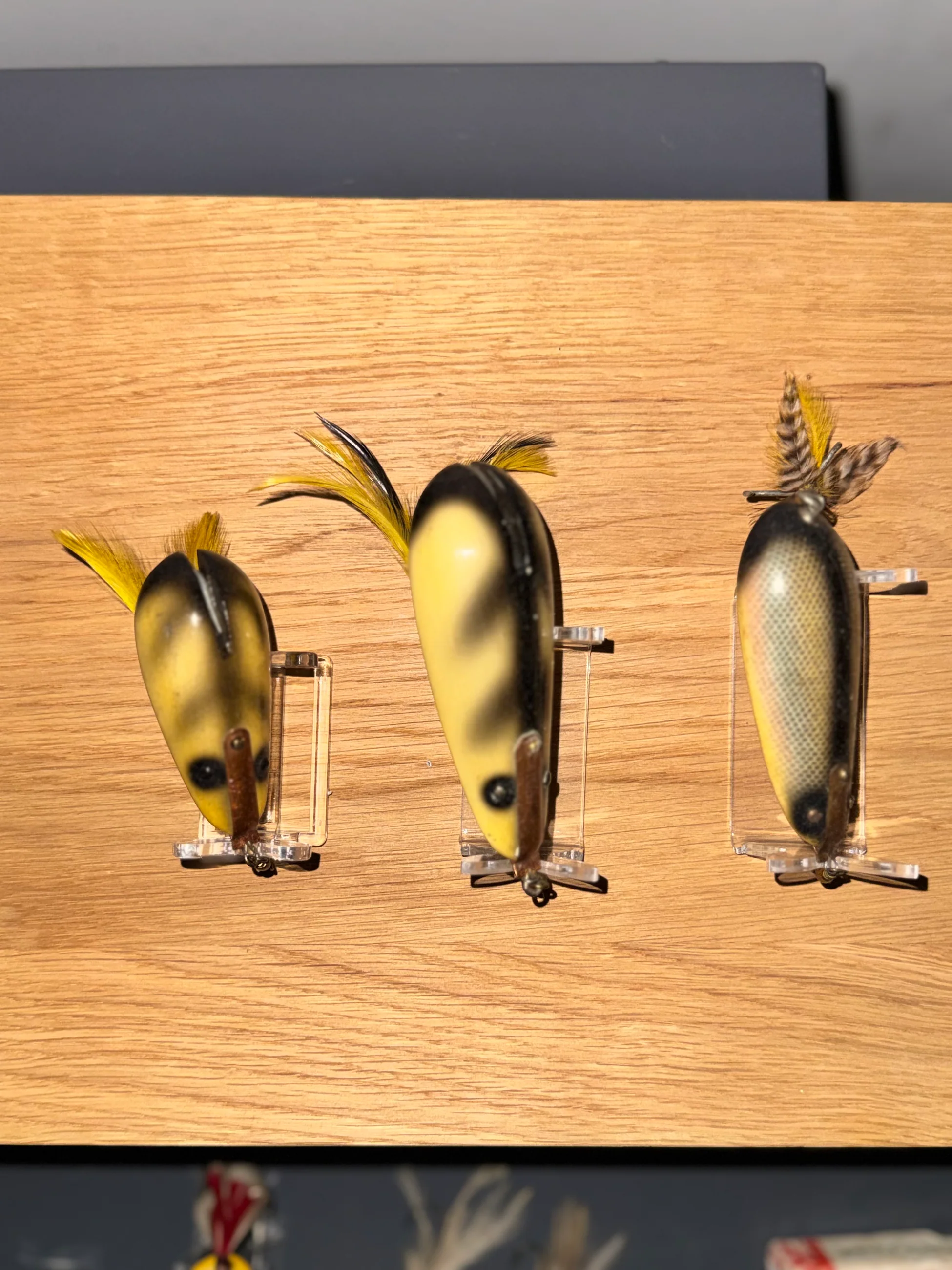
Have a lure to identify?
Start with shape, construction, and markings.
Here for a closer look?
Explore sixteen collection photographs.
Following the evidence?
Read the documents behind the history.
THE LURES
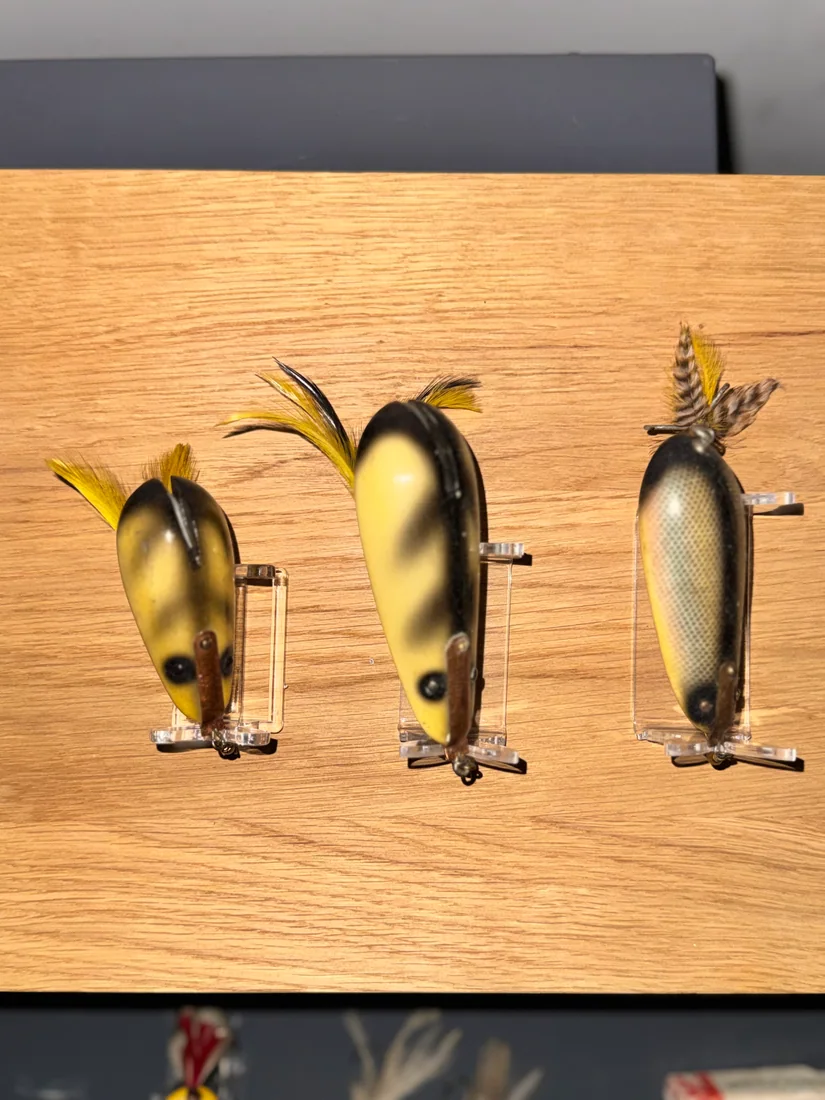
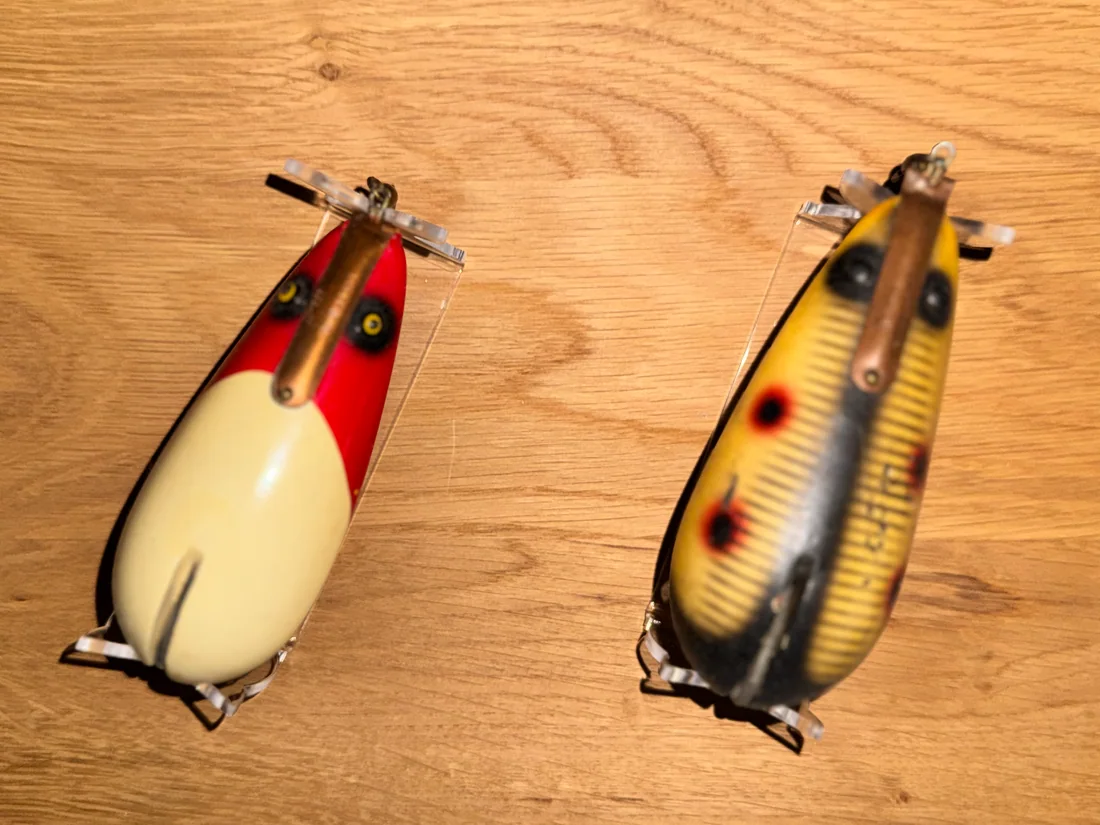
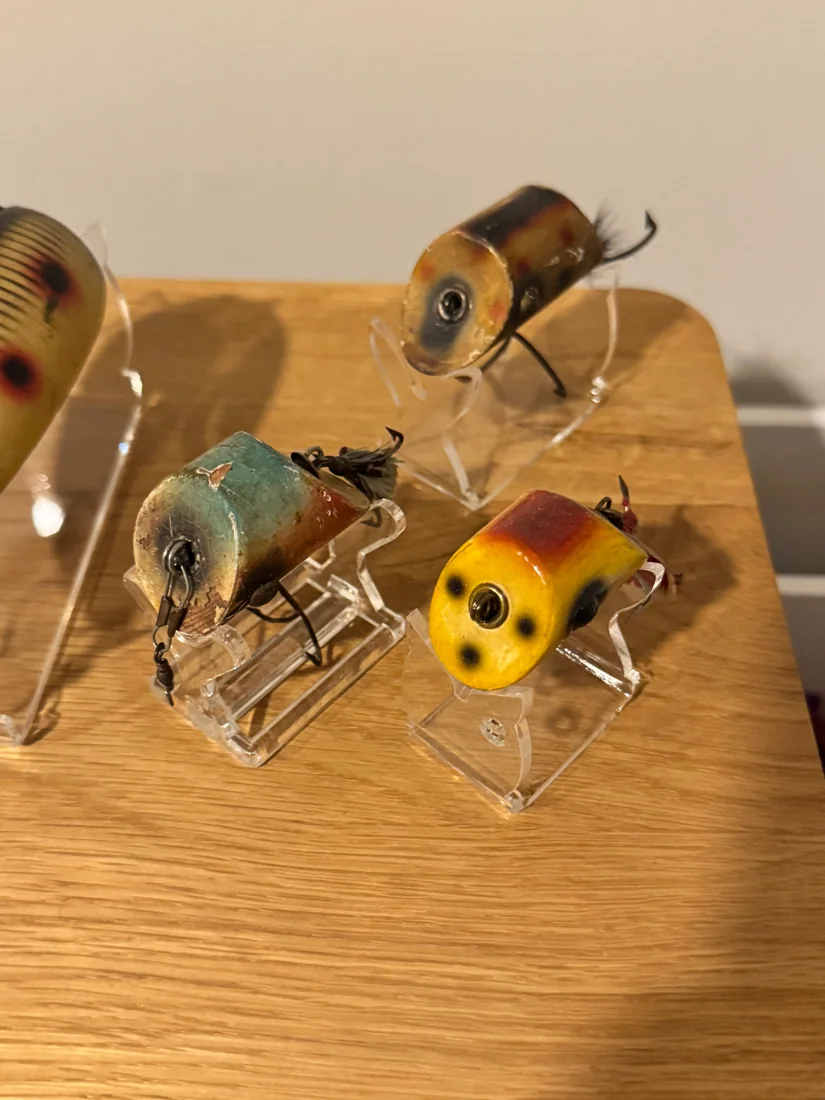
Start with the shape.
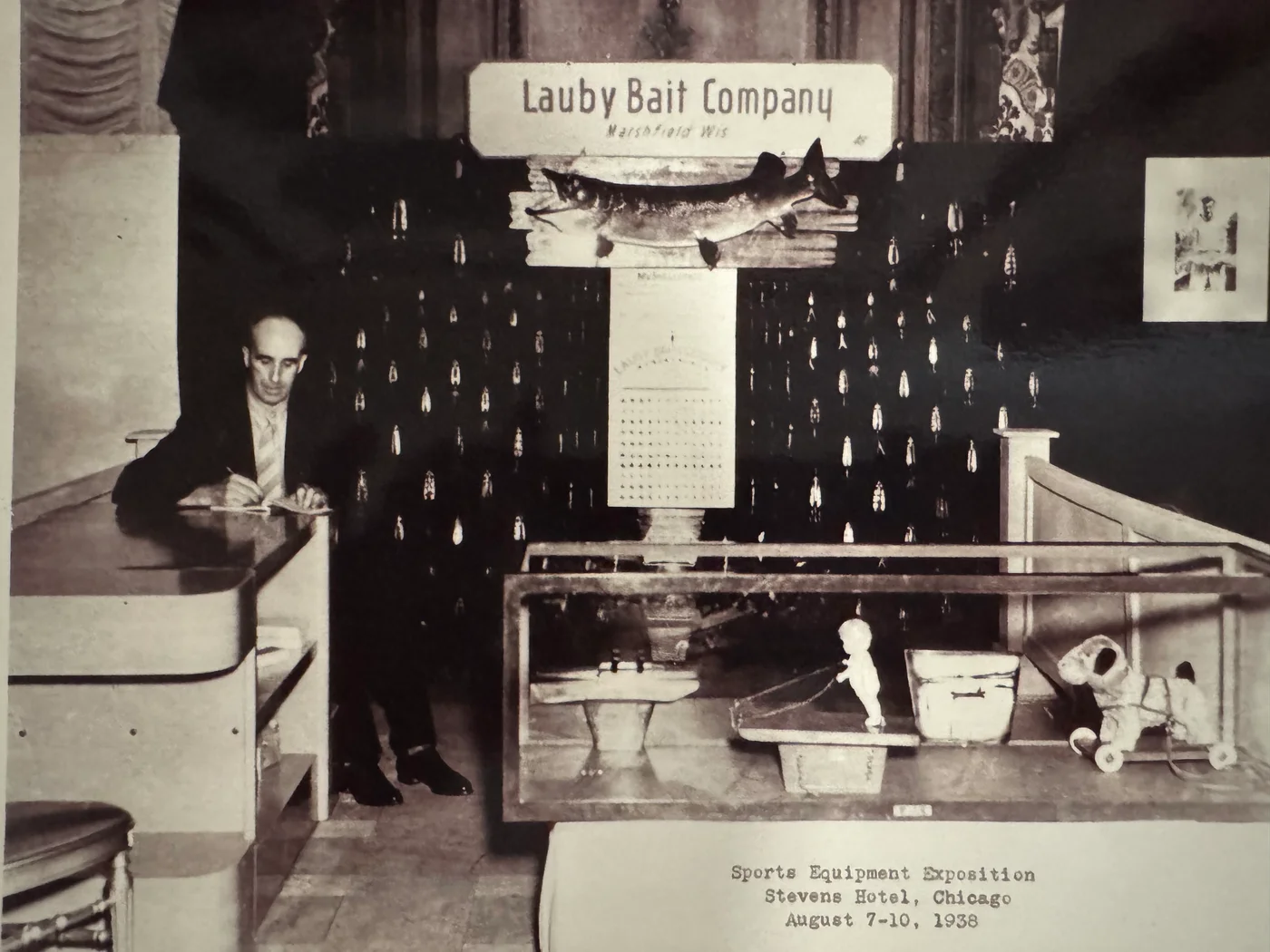
THE INVENTOR & THE WORKSHOP
A maker who thought
beyond the bait.
Anton J. Lauby worked on both the lure and the machinery used to make it. Five reviewed U.S. patents trace his experiments in buoyancy, hook arrangements, and manufacturing equipment.
The patent record spans grants from 1935 to 1946. See the five reviewed patents.
Follow the inventionsA REFERENCE YOU CAN EXAMINE
Every object has a story.
Every claim needs a source.
Photographs show what survives. Documents show what was described, offered, or patented. The distinction is part of the story.
What was offered.
The 1939 catalog records names, patterns, and advertised sizes.
Explore the catalog 02 / PUBLISHED HISTORIESWhat was recalled.
Later accounts preserve workshop detail and identified witnesses’ recollections.
Read the source notes 03 / OPEN QUESTIONSWhat remains uncertain.
Dates, model associations, and differing accounts stay visible.
Compare the evidenceTHE COLLECTION IN DETAIL
Paint. Patina.
Ingenious hardware.
Sixteen photographs bring the small details into view, from feathered tails to recessed hooks and original box lettering.
Explore the photographs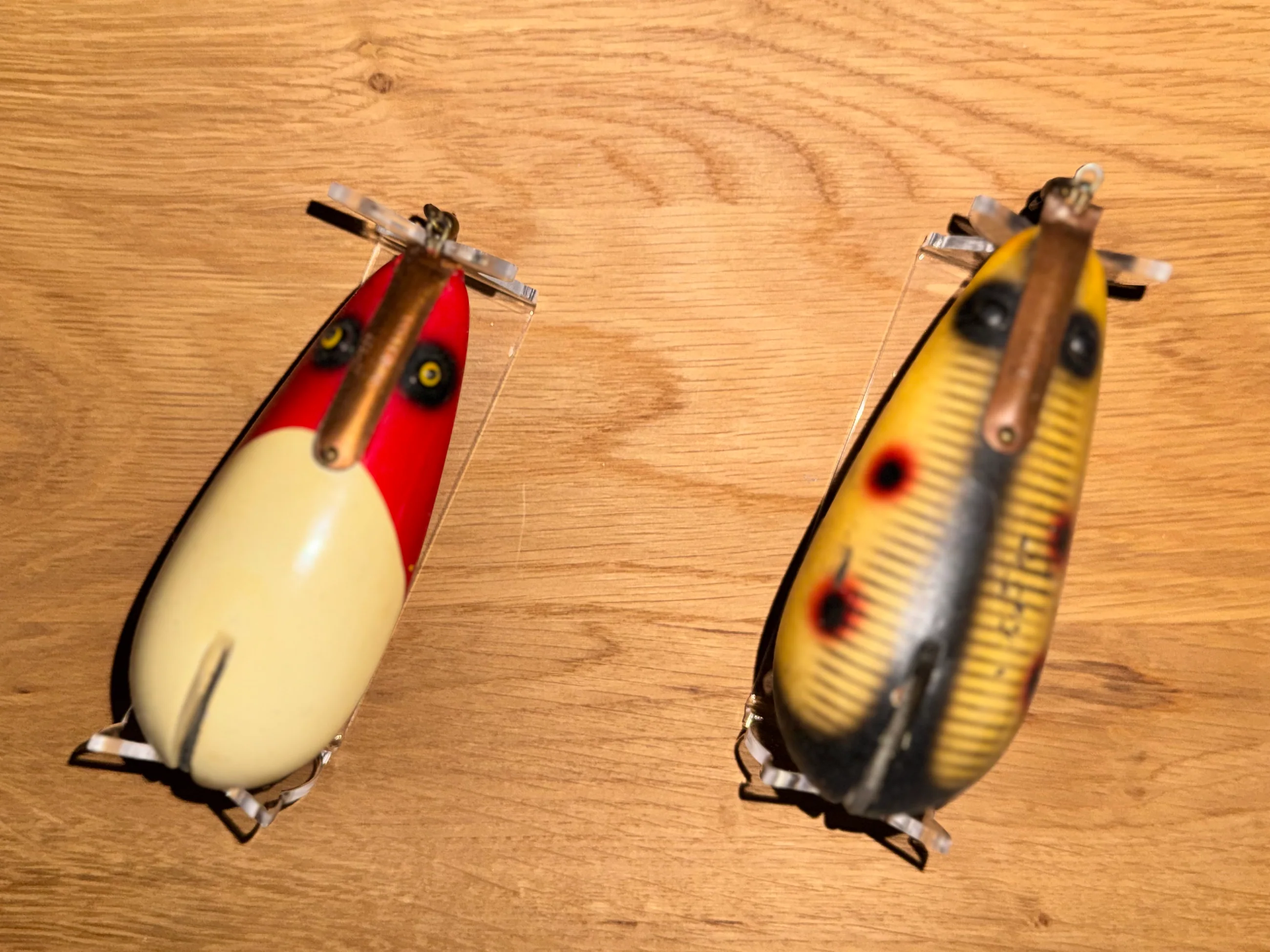
HELP COMPLETE THE PICTURE
Have a piece of the story?
A marked lure, a dated catalog, or a workshop photograph can add to the record.